
Pattie Gonia is Dragging Patagonia’s Reputation Through the Mud
Patagonia’s recent lawsuit against drag queen and climate activist Pattie Gonia isn’t as simple as “big brand crushes queer creator”. Rather, the suit revolves around several other considerations. The heart of the story is a four-way tension between the legal obligation to police a famous mark, the boundary between lawful parody and unlawful commercialization, a prior agreement between the parties, and public perception.
Mike Rowlands is a Partner & CEO at Junxion Strategy. Lara Pearson is the Founder and a trademark attorney with Brand Geek.
What’s Actually Going On
The Law
At its heart, trademark law is a consumer protection law that guarantees consistent quality across all uses of a brand. This way, consumers can rely on brands as indicators of quality. As part of this, trademark law requires brand owners to maintain exclusivity and control over the use of their brands. Knowingly allowing another party to use one’s brand without controlling the quality of that entity’s goods or services can result in abandonment of rights in that brand, not only in the context of that specific unauthorized user, but entirely. This is why trademark enforcement is such a big deal. To prove trademark infringement, a brand must prove that consumer confusion is likely to happen—a relevant point in the Pattie Gonia case.
The Facts
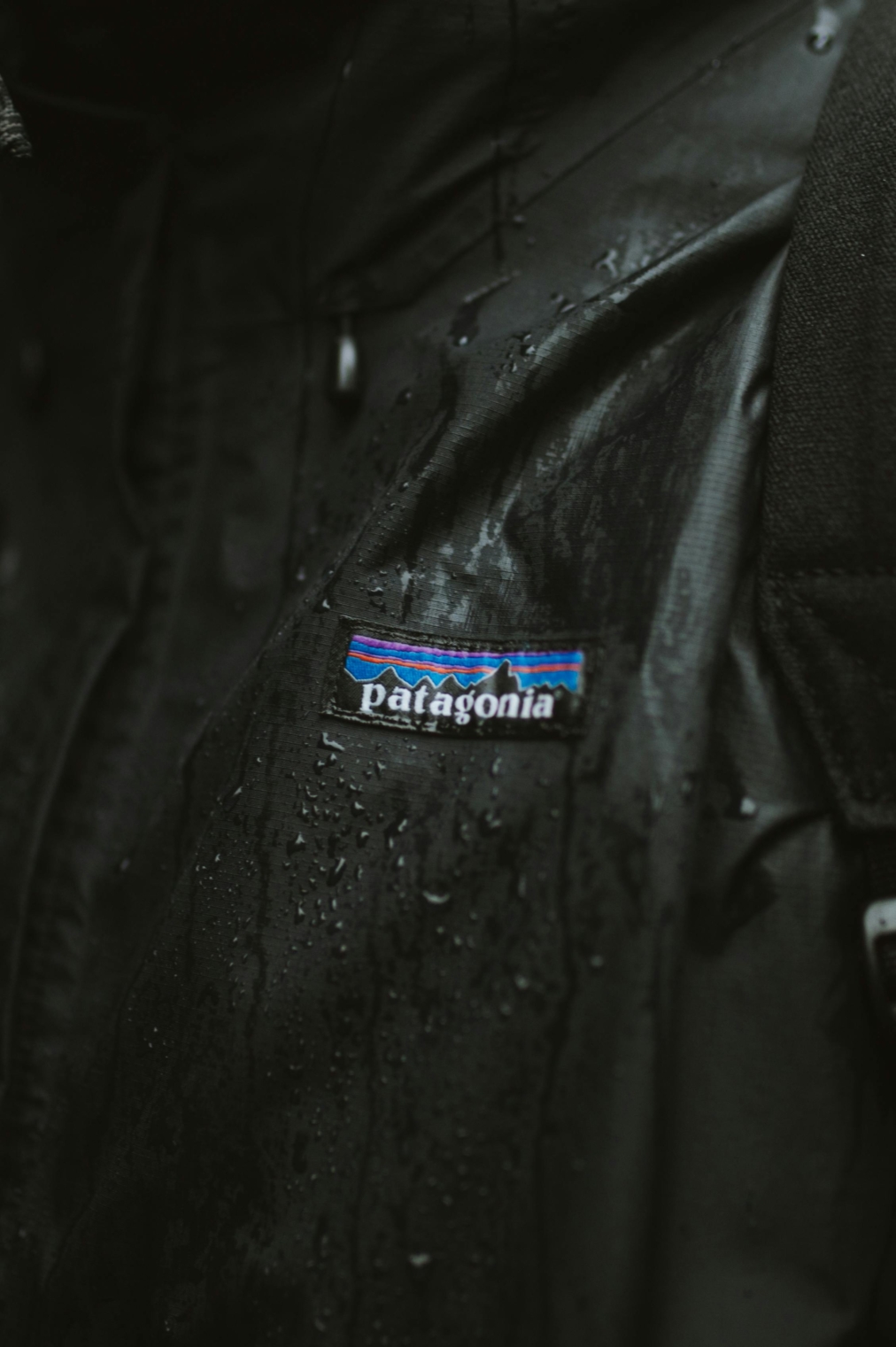
Founded in 1973, Patagonia is an adventure apparel and gear company whose declared purpose is to ‘Save Our Home Planet’. SInce inception, Patagonia has donated more than $250 million to environmental groups, and has become an active proponent of workers’ rights. Patagonia has long been beloved in the do-gooder business and outdoor industries for its environmental activism and leadership.
Nearly 45 years after Patagonia launched, Pattie Gonia adopted a persona parodying the famous outdoor clothing brand. She began performing in 2018 as an environmentalist drag queen who advocates for inclusivity and diversity in the outdoors. She has a community of three million people and has raised over $3.5 million for environmental causes.
Patagonia first learned about Pattie Gonia in early 2022 and initiated a conversation that resulted in an agreement that Pattie would limit her use of PATTIE GONIA by…
- Not using or displaying Patagonia’s logos
- Not using the belwe font in content
- Not using PATTIE GONIA in any form on products
Pattie, however, did not uphold her end of the bargain, using both the PATAGONIA logos and the belwe font.
She also used PATTIE GONIA on apparel that she sold, and filed a trademark registration application to protect PATTIE GONIA on audio and video recordings, stickers and posters, and clothing (as well as some services, which are also close to Patagonia’s offerings).
The Suit
In January this year, Patagonia sued Pattie Gonia in federal court in California, alleging trademark infringement, unfair competition, and dilution based on Pattie’s increased encroachment into Patagonia’s markets and her disregard for her agreement with Patagonia. Patagonia issued a public statement on the day that it filed suit, stressing that it communicated with Pattie for more than three years to discuss ways she could continue her environmental and social advocacy, brand deals, and other work without infringing on Patagonia’s trademarks, only filing suit after she began selling “Pattie Gonia” apparel and filed a trademark registration application for PATTIE GONIA. Further, Patagonia’s suit seeks no damages, though it did ask the Court to award its court costs, including reasonable attorneys’ fees.
Presumably in hopes of settling, the parties filed three Stipulated Extensions to Extend [Pattie’s] Time to Answer. Unfortunately, the Judge denied the parties’ most recent stipulated extension and Pattie filed an Answer in the litigation on the April 29, 2026 deadline. The Answer is a generic response citing insufficient knowledge to address most factual claims and denying all legal allegations, while also citing every affirmative defense that might be available, along with some that seem to have nothing to do with the case.
On May 27, 2026, Pattie took the case from a court of law to the court of public opinion, publishing an Open Letter to Patagonia, Inc. in which she claimed:
“[W]hat [Patagonia] is actually trying to do is to take away my name permanently… this is not a brand conflict; this is a corporation trying to erase an activist….”
Pattie then urges Patagonia’s CEO, board, and Purpose Trust trustees to drop the suit, arguing that the case undermines their stated mission to save the planet and is harming an LGBTQ+ environmental leader who has raised millions for climate causes.
The clash between these two narratives is exactly where many online commenters have fallen into all‑or‑nothing thinking.
The Prior Agreement Everyone’s Skipping Over
One crucial fact that’s getting lost in the current media outrage: Patagonia didn’t immediately sue a queer activist who was parodying its company when it first encountered her in 2022. Rather, it worked out an agreement with her—an agreement that included negotiated boundaries. By 2026, the evidence shows that Pattie Gonia was no longer honoring that agreement or its boundaries.
The terms of the parties’ agreement were memorialized in February 2022 email exchanges reproduced in Patagonia’s complaint. Patagonia’s story is straightforward: they didn’t immediately sue a queer activist for a pun; they listened to her and negotiated guardrails that allowed her to continue her parody and advocacy work while forgoing use in connection with any goods or other non-entertainment and advocacy services.
By late 2024, Patagonia alleges that Pattie registered pattiegoniamerch.com and started selling apparel and stickers under the PATTIE GONIA mark. Patagonia wrote Pattie Gonia again in February and March 2025 to remind her of their 2022 understanding and ask her to stop commercial use of Pattie Gonia on apparel. Then, in September 2025, Pattie filed a federal trademark application claiming exclusive rights to PATTIE GONIA for audio and video recordings, stickers and posters, clothing, marketing services, environmental activism, live events, and more—categories that mirror many of Patagonia’s own registrations for PATAGONIA (of which there are 37 including 11 owned by Patagonia’s Patagonia Provisions CPG company) for apparel, food and beverages, online retail, activism, media, and events.
You don’t have to accept every element of Patagonia’s framing to see Patagonia’s point: this isn’t a case where a corporation suddenly woke up and sued over a joke; this isn’t a case where a deep-pocketed corporation decided to take a heavy-handed “sue-the-pants-off-you” (aka “scorched earth”) approach to silence an activist with whom they disagreed in some way.
No, this is a dispute over a shift from a collaborative agreement (memorialized in emails) to unilateral commercialization by a party who agreed to refrain from doing just that.
Why Patagonia Has to Defend Its Mark
As stated in its January 21, 2026 press release, Patagonia sued because: “[t]o maintain our own rights, we must prevent others from copying our brands and logos. If we do not, we risk losing the ability to defend our trademarks entirely.” They also note they cannot “selectively choose to enforce” based on whether they agree with someone’s politics, because inconsistent enforcement can later be used against them when they try to stop “oil and gas lobby, counterfeiters, hate groups, or other bad actors” from using the Patagonia name and logo.
The complaint demonstrates a history of enforcement of the PATAGONIA brand against a multitude of unauthorized uses, including: FRATAGONIA, CATAGONIA, PETAGONIA, PETROGONIA, and GATAGONIA. That pattern of enforcement matters when defending a famous brand: allowing one highly visible infringing use to slide—especially one that seeks its own registration for overlapping goods and services—potentially hands future defendants a ready argument that the PATAGONIA mark is weak, diluted, or only selectively enforced.
From a progressive standpoint, this is an uncomfortable and vitally important truth: If you value Patagonia to continue leading the way for environmentally and socially responsible businesses, in the outdoor industry’s protection of public lands, for fair & transparent labor standards, for sourcing and repairing textiles, and being able to prevent fossil‑fuel companies, extremist groups, and other “bad actors” from slowing that work down by trading on, or damaging, its reputation, then we’re hoping this case study has helped you understand why this lawsuit was necessary for Patagonia.
That’s simply the way US trademark law works!
Where Parody Ends and Commercialization Begins
A lot of online support for Pattie leans on parody: isn’t “Pattie Gonia” obviously a pun? Isn’t drag inherently social commentary?
Parody is recognized as “fair use” under both US Copyright and Trademark law (though it is more commonly discussed in copyright law.) For a parody to be a lawful fair use under US trademark law, the use must be clearly expressive, non‑source‑identifying (not functioning as a brand) and unlikely to confuse consumers about who is selling what. Parody and commercialization are mutually exclusive. It is one or the other. It’s either a social commentary parody, or it is a commercial use. Even the Supreme Court of the United States weighed in on this in June 2023 in the Bad Spaniels case, in which the Court held that the BAD SPANIELS dog toy infringed the famous JACK DANIEL’S whiskey trademark.
Patagonia’s Complaint doesn’t attack Pattie’s existence as a persona; it targets…
- Use of Pattie Gonia as a trademark on apparel, stickers, events, and environmental activism services that directly overlap Patagonia’s registrations,
- Use of a logo that mimics Patagonia’s famous P‑6 label, including the mountain silhouette and layout, on merch, gloves, and clothing, including at events like an Out Magazine appearance, and
- A trademark application seeking nationwide exclusive rights to Pattie Gonia for clothing, marketing, activism, live performances, and recordings.
The Complaint also includes evidence of actual confusion, quoting social‑media comments demonstrating a perceived affiliation or collaboration between Patagonia and Pattie Gonia when there is none—which is exactly what trademark law strives to prevent. These instances of actual consumer confusion mean Pattie’s use is no longer “just a campy wink;” it’s morphed into a competing trademark use in the exact same product categories and advocacy lanes.
Patagonia’s press release is explicit that they are “not against art, creative expression, or commentary about our brand” and that the problem is “use of a near‑copy of our name commercially – including as a brand for environmental advocacy – and [the] trademark application” that would give Pattie exclusive rights going forward. In other words, the parody defense evaporates once the parody turns commercial, especially when it’s vying for the same space.
Pattie Gonia’s Perspective and the Purpose Question
Pattie’s open letter casts the lawsuit as an existential threat: she writes that the case “hurts not only me and everything I’ve built but also the people I employ, the millions of people I try to inspire, and dozens of nonprofit organizations that I have supported.” She frames herself as a drag artist and climate activist who has built a community of more than three million people, created a nonprofit, raised approximately $3.7 million for environmental causes and helped bring hundreds of thousands of people into the outdoors who never felt they belonged there.
From that vantage point, the lawsuit looks like a misalignment between Patagonia’s purpose and its conduct: “Our home planet needs every dollar and every moment of time we can all give to it right now. We can’t afford to waste time and money fighting among ourselves.” Pattie quotes Yvon Chouinard’s line—“You are what you do, not what you say you are” and asks whether spending “hundreds of thousands of dollars” litigating against her is really the best use of a purpose‑driven company’s resources.
She also emphasizes that she has been seeking an “amicable settlement” since the complaint was filed and believes there’s “room for an agreement that protects your trademark while letting me keep my name and my work.” Her ask is not for total surrender from Patagonia; it’s for senior leadership and trustees to intervene, override outside counsel’s strategy, and craft a values‑consistent resolution.
Taken together, her letter reminds progressives of a vital truth: “the law made us do it” can explain why a suit was filed, but it does not exhaust the choices available within litigation—especially in settlement.
Licensing May Not Fix This Thing
If you are wondering, “why can’t Patagonia just license its mark to Pattie and be done with this?” The reason stems back to the beginning of this article, where we discussed the principle that trademarks indicate consistent quality across all uses of the mark. Trademark owners have a legal obligation to control the quality of goods and services offered under their marks, especially authorized uses made by their licensees. For Patagonia to license use of PATTIE GONIA, it would have to demonstrably control the quality of goods and / or services offered by Pattie under that mark. That takes time and effort and carries a risk of abandonment if the trademark owner fails to exercise the requisite quality control.
Moving Beyond Progressive Infighting
So where does all this leave those of us who care about both LGBTQ+ liberation and robust environmental leadership?
A few reframing moves might help:
- First, let’s start with what this is NOT:
- This is not a case about whether queer art and activism deserve to exist.
- This is not a case about greenwashing or purposewashing by a company that isn’t living up to its values.
- This is not a case about a big corporation trying to outspend a critic (or an ally).
- This is a case about an activist who shifted from parody to commercialization.
- This is a case about the legal enforcement actions required for a famous brand to maintain its exclusivity.
- This is a case about the power of social media to spread one party’s feelings and opinions about the facts faster than the facts themselves.
- This is a case about the strength of public perception.
- Trademark law treats queer and cis, radical and conservative, the same: if you build a commercial brand that is confusingly close to an existing famous mark in the same categories, you’re likely to get sued. The law doesn’t care whether you’re raising money for land defenders or for oil lobbyists. (Nor should it, in a free and open society.)
- “Purpose vs. enforcement” is a false dichotomy: Patagonia’s ability to channel profits into activism depends on stakeholders easily recognizing which apparel and media belong to Patagonia, and not to a sound‑alike, not matter how clever or popular.
Yet progressives are right to pressure both sides toward a solution that maximizes shared planetary goals and minimizes collateral damage to marginalized creators. That could include…
- A formal written Coexistence Agreement that allows Pattie to retain her stage name and non‑confusing logos, while rebranding her product lines (her website now says PATTIE MERCH, indicating she is willing to do this.)
- Limiting Pattie’s trademark registrations to PATTIE MERCH and other non-identical marks
- Mutually beneficial messaging: jointly affirming that trademark disputes don’t change either party’s commitments to LGBTQ+ inclusion in the outdoors or to aggressive climate action.
- Transparency: Patagonia more plainly communicating the existence of the 2022 agreement and settlement proposals; Pattie clearly distinguishing between being told to stop all activity versus being asked to change the way her brand is used on apparel and registrations.
- Attunement: Patagonia increasing its sensitivity to the tone and timing of its messaging on this sensitive subject.
Let This Be a Lesson
For progressive parties and movements, the deeper lesson from this dispute is how we respond when “our side” ends up on both sides of the “v.” We can cheer on a corporation for living up to its values while simultaneously acknowledging the legal logic and necessity behind its brand enforcement. And, we can even do so at the same time as we can stand with a queer climate activist without pretending that the trademark she triggered is frivolous or bigoted by definition.
Nuance is not neutrality; it’s a strategy. It keeps us from burning bridges we’ll need for the next climate fight, the next anti‑trans bill, the next campaign to protect public lands.
Mike Rowlands is a Partner & CEO at Junxion Strategy and is an internationally recognized thought leader on social purpose business.
Lara Pearson is the Founder and a trademark attorney with Brand Geek, which specializes in protecting values-driven brands in the United States and abroad.
