
Skip Navigation
June, 16, 2026  |  Mike Rowlands  |    | 

Can B Corp’s New Standards Drive Economic System Change?
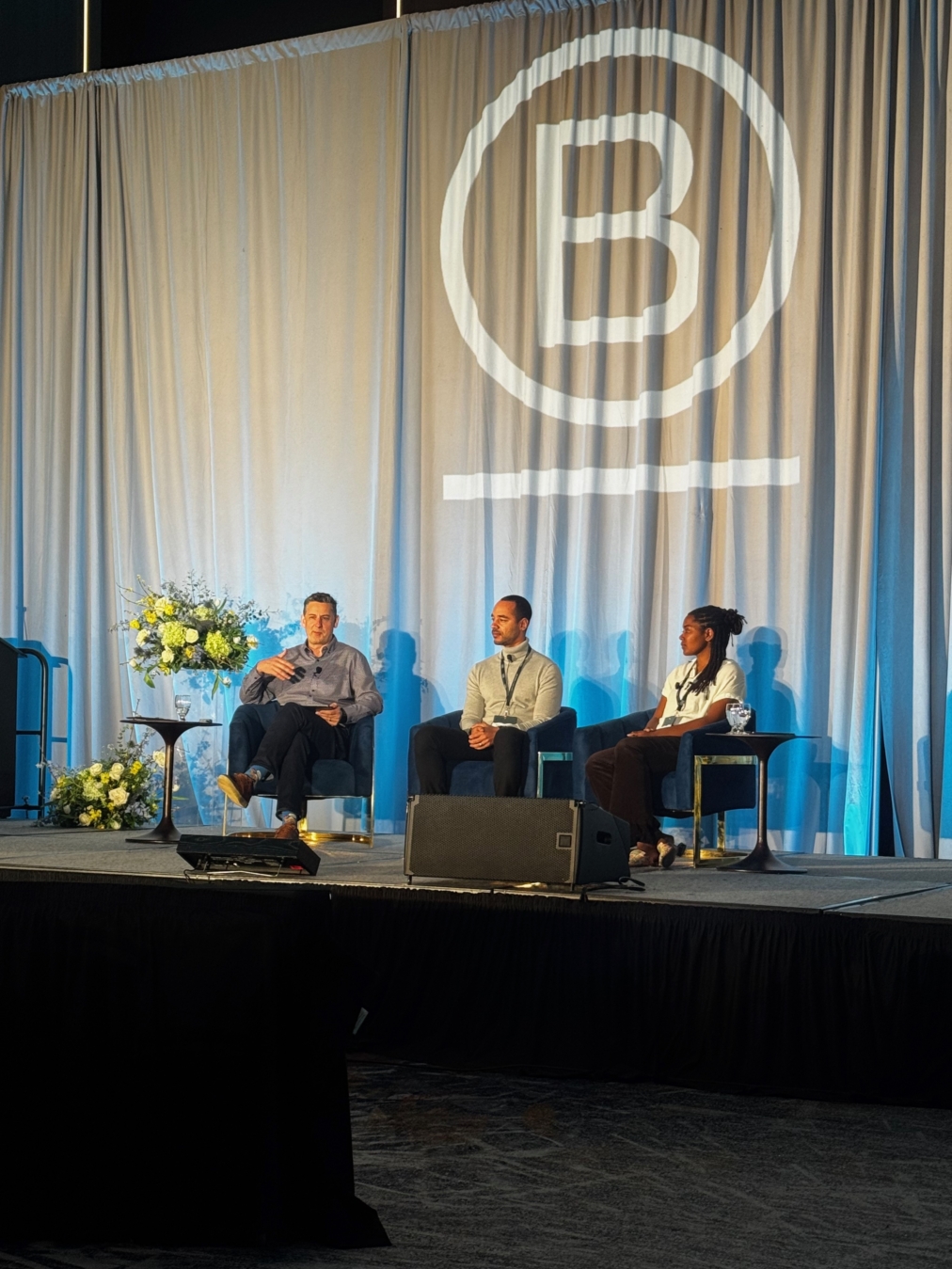
At this year’s B Corp Champions Retreat, we gathered on Earth Day to explore a question that sits at the heart of our movement: can B Lab’s new standards truly help drive the global system change we need?

Junxion's CEO Mike Rowlands speaking at B Corp Champions Retreat
Mike Rowlands
Partner and CEO of Junxion, Mike has spent more than 20 years working to catalyse social responsibility and sustainability.

“System change” is on more and more of our lips these days. But without some curiosity—about which systems we mean, who must change them, how fast, and toward what vision—it risks becoming jargon. With curiosity, though, it becomes something richer: a commitment grounded in aspiration, compassion, and shared learning.

It was with that spirit of curiosity that I and two of Junxion Strategy’s clients stepped into our conversation on stage at the 2026 Champions Retreat. We looked together at commitments to economic system change through five lenses: the global context for purpose-driven organizations, national purpose economies, and the work of three B Corps and B Corp–aligned organizations that are already reshaping systems in practice.

From Shareholder Primacy to a Purpose Economy

We were convened in Milwaukee, WI, somewhat fittingly less than 100 miles from Chicago, home of the ‘Chicago school’ of economics most associated with Milton Friedman’s famous claim, “There is one and only one social responsibility of business—to use its resources and engage in activities designed to increase its profits.” That line helped cement the era of shareholder capitalism from the 1970s through the Reagan and Thatcher years and into business schools worldwide.

But Friedman’s words are frequently cut short. He went on to say that companies should pursue profit “so long as [the firm] stays within the rules of the game,” engaging in open and free competition “without deception or fraud,” and acknowledging the role of “ethical custom” beyond mere law. Even Friedman wasn’t arguing for utterly unfettered, free market capitalism. Yet the shorter form of his logic stood strong for decades, shaping businesses and the business sector’s role in our economies for good and for ill.

Most leaders in the B Corp community have grown up under a second logic: stakeholder capitalism. It asks us to minimize the negative impacts of ‘business as usual,’ to consider interests beyond shareholders, and to aspire to do no harm. This is the important baseline many of us hold today. This transition from ‘logic 1’ to ‘logic 2’ took decades and arose largely in response to the profound, negative impacts of free market capitalism: the climate crisis, biodiversity loss, economic inequities, social polarization, and so on.

But B Lab has always pointed beyond that—to a third logic. What if managing negative side effects isn’t enough? What if business must make a meaningful, positive contribution to society and the living world? That is the essence of a positive-sum, regenerative model of purpose economies that’s emerging internationally.

A new ‘logic’ is emerging that puts wellbeing first in economic systems.

Purpose as a Global Standard

To ground our conversation, I shared insights from a recent discussion with Dr. Victoria Hurth, an independent “pracademic” and Fellow of the Cambridge Institute for Sustainability Leadership. She has been at the center of a global effort to define what it means to be purpose-driven—work happening not in a fringe think tank, but at ISO, the International Organization for Standardization.

Dr. Hurth co-chaired the development of ISO 37000, the global standard on organizational governance, which places organizational purpose at the heart of decision-making. She is now leading development of ISO 37011, a new standard that will further articulate what we mean by “organizational purpose.”

Under ISO 37011, purpose-driven organizations exist—by definition and governance—to make “an optimal, strategic contribution to the long‑term wellbeing of all people and our shared environment.” It is a demanding definition: long-term, for all people, and for our shared environment.

If you know B Lab’s new standards, this language will sound familiar. The definition of “Public Purpose” in the Purpose & Stakeholder Governance topic area closely mirrors the ISO framing. Every company pursuing certification under the new standards will need to articulate a public purpose that meets this standard.

In other words, B Lab is weaving system change into the very fabric of certification. Each B Corp must define its own optimal, strategic contribution to the long‑term wellbeing of people and planet—and the standards provide a roadmap for how to deliver it.

This is one way B Lab directly addresses unfettered, zero‑sum, extractive economics. By aligning with emerging global standards, it unites a community of businesses around a shared commitment, while leaving room for each enterprise to pursue the specific system changes it is best placed to lead.

Building National Purpose Economies

System change doesn’t happen only in global standards bodies or through individual companies. It also happens at the level of national economies—through enabling conditions, professional norms, and public policy. Scotland, New Zealand, and Australia have all been leaders on aligning their national economic policies to human and planetary wellbeing.

Canada isn’t far behind! The Canadian Purpose Economy Project is an collaborative initiative I co-founded with some of the country’s leading thinkers on social purpose in business. (Among us, a few also served as advisors to B Lab on the new standards.) Our aim with the Project is to create the conditions for many more social purpose businesses to emerge and thrive.

As the broader conversation about the role of business goes mainstream, we’re seeing serious progress: A recent assessment of the TSX60—the 60 largest public companies in Canada—found that 40% have published a statement of purpose. The quality and depth of implementation varies, of course, but the sheer prevalence of purpose statements is a telling and significant first step.

Findings are similar for small to medium enterprises (SMEs), overwhelmingly the driving force of Canada’s national economy. In partnership with the Financial Resilience Institute, we surveyed 600 SMEs and found that 38% have already articulated a purpose, have it implied in their vision or mission, or plan to develop one in the next year or two.

Have we passed an adoption tipping point for meaningful social purpose in business? If so, the work ahead is to deepen practice and impact—and our Champions Retreat discussion surfaced some invaluable lessons from respected social purpose leaders.

Have we passed an adoption tipping point for meaningful social purpose in business?

How B Corps Are Already Shifting Systems

Standards and enabling conditions matter, but system change ultimately comes to life in organizations doing the work on the ground. The panel included three powerful examples.

Iroquois Valley Farmland REIT is a real estate investment trust committed to transforming agricultural land stewardship in the United States. Its model addresses systemic barriers that prevent farmers from owning or leasing land on fair terms, and supports transitions to organic agriculture in ways that are economically viable. This is food systems innovation with deep implications for human health and environmental regeneration.

Olivia Watkins, Board Member with Iroquois Valley, talked about the organization’s journey with the B Corp certification; they re-certified in 2025 with a score of 124.1—just before the new standards took effect. The main topic of reflection and discussion for the team now is what can be done to “refine and hone [to] gear up for recertifying in a couple years.” 

Systems thinking undeniably shapes the organization’s strategy and work, and in a big way. For instance, under the B Lab Impact Topic of Purpose and Stakeholder Governance, Watkins shared the specific importance of mission-alignment between the highly purpose-driven investment fund with its investors and funders. She emphasizes Iroquois Valley “is not a fund where we have a specific carve out for impact investments, or a specific carve out for non-extractive investments. One hundred percent of our portfolio is dedicated to ensuring that we’re able to provide non-extractive capital, and in return, we’re offering our investors below market rate returns.”

The B Lab Standards have allowed the organization to embed this values alignment “into the fabric of the organization” from the very beginning, by “ensuring equity and power” in that “all [the organization’s] shareholders and stakeholders have a say.”

The organization has developed a flourishing system of stakeholder governance, allowing farmers to both participate in the system they’re working to create, and even to lead the change by sitting on the Board of Directors. 

Iroquois Valley is dedicated to addressing systemic financial inequities.

Covering another one of the seven new B Lab Impact Topics—Justice, Equity, Diversity, & Inclusion (JEDI)—Iroquois Valley has developed a note, Rooted in Regeneration, dedicated to addressing systemic financial inequities by providing discounted interest rates for BIPOC farmers. Watkins explained the role played by this note in “[creating] products that serve specific communities in a way that’s culturally appropriate and relevant.”

The second guest on stage in Milwaukee was GreenShield’s Taharka Gibb, who serves as their Director of Strategic Initiatives. GreenShield is the first organization in Canada to operate as a payer-provider—offering insurance, administering benefits, and paying claims as a ‘payer’ while offering health services such as mental health, pharmacy, and medical services as a ‘provider.’ Integrating both sides of the payer-provider equation enables GreenShield to simplify access to care, remove administrative barriers, and improve health outcomes for its customers.

Included among its many societal contributions is a collaboration of over two dozen organizations to uplift youth mental health across Canada. In a context of rising mental health needs and unequal access to care, GreenShield’s purpose‑driven model exemplifies how a financial and health services organization can reorient itself toward wellbeing and equity.

GreenShield is currently in the process of certifying under B Lab’s new standards. Gibb shared with us some key catalysts within the Impact Topics that support GreenShield in pursuit of their purpose to achieve “better health for all.”

“The focus on being purpose-led and stakeholder governance” are vital to GreenShield’s model, as the organization relies on a thoughtful governance structure to ensure that people and health equity “remain the centre of [their work]” while they grow commercialized services. Gibb echoed Watkins when he asserted that “the people [to whom GreenShield is] delivering services need to be at the table as well.” On point, he noted that the organization focuses on “designing services [that] youth voices inform.”

Gibb also provides context on the type of thinking and design that is needed to have a just system in Canada, so “healthcare is truly a right and not a privilege,” bringing our attention to the Impact Topic of Human Rights. GreenShield recognizes that “they [need] to be designing for many different intersectionalities and designing for what’s often considered ‘on the margins,’” in order to build “an equitable system for everyone.” 

Perhaps most innovative, though, is GreenShield’s drive towards systems change through collective action on youth mental health supports. 

Today, GreenShield supports over 20 government-trusted local and national organizations across Canada that focus on priority populations across youth, with the mission of “building an integrated network as a funder and supporter… so [youth] can get choice and access to services that are more customized and suitable for their identities.”

GreenShield supports over 20 organizations to deliver youth mental health supports.

In this integrated system, youth and beneficiaries can move between different providers and programs of care through a network of referrals. In other words, GreenShield strives to deliver complete care within Canada’s existing, universal healthcare framework.

There is a common theme here: providing access for people who don’t have access. This brings us back to Watkins and her work with the Black Farmer Fund.

Black Farmer Fund is building Black community wealth and health by investing in Black agricultural systems in the U.S. Northeast. By providing capital and technical assistance—and responding to community needs with flexibility and care—it offers a deliberate alternative to predatory finance. Its work sits squarely at the intersection of food systems, racial equity, and economic justice.

As a founding member of the Black Farmer Fund, Watkins discussed her own experiences as a farmer, and her realization that systemic barriers in the US—within the banking system and the USDA—have created conditions including a lack of access to capital.

The Black Farmer Fund is “not only just working on shifting capital, but also shifting power” through collective action. Watkins says the Black Farmer Fund “didn’t want to be an organization that was focused on transactions and moving money; we wanted to bring the community into the decision-making.”

Black Farmer Fund “wanted to bring the community into decision-making.”

The fund has done just that: The investment committees include “representation from all the different states, or as many of the states as possible… in addition to different roles of folks that we would be investing in.” The key structural piece is that these committees are granted higher decision-making power than the board on decisions with the businesses, aligning with the message to “continue to put the decision-making in the hands of the community.” 

The B Lab Impact Topic of Environmental Stewardship & Circularity plays an important role here too. The investment committees vote on both impact decisions and deeper financial due diligence, with the former including questions such as “How are you managing ecological well-being?” Watkins spoke to the “inverted triangle,” in which community members and staff don’t always agree on projects, but by respecting the decisions made by the community, the Black Farmer Fund strives to create “community health and wealth.”

Five Cases’ ‘Strategic Contributions’

Each of these organizations is making an “optimal, strategic contribution” within its own context—community-based, sector-based, or place-based. Each is pushing beyond managing harm to actively reshape the systems it touches: global governance standards, national economies, food and land, healthcare access, and financial structures.

At Junxion Strategy, our own purpose is to “accelerate the shift to the purpose economy.” We do this through our consulting work, and by co‑founding and / or supporting collective platforms like the Canadian Purpose Economy Project, the Wellbeing Economy Alliance, and of course B Lab. These collaborations allow us to engage with elected representatives and regulators, strengthening the policy and legislative frameworks that will make purpose‑driven business the norm rather than the exception.

Taken together, these examples show how the seven topic areas in the new B Corp Standards—Purpose & Stakeholder Governance, Environmental Stewardship & Circularity, Human Rights, JEDI, Government Affairs & Collective Action, and more—map directly onto systemic interventions. When companies align their strategy with these topics, they are not simply “doing better CSR.” They are helping to re‑design the systems they inhabit.

Nested Systems and a Call to Action

So, can B Lab’s new standards advance global systems change?

To answer that, it helps to think in nested systems. At the broadest level, global standards bodies like ISO are more specifically defining and standardizing what it means for an organization to be purpose‑driven. Within that frame, B Lab’s V2 standards give companies a clear, consistent, and ambitious model to embed public purpose and stakeholder governance into their DNA.

Within countries, initiatives like the Canadian Purpose Economy Project build supportive ecosystems and policies.

And within sectors and communities, organizations like Iroquois Valley, GreenShield, Black Farmer Fund, and Junxion Strategy are making targeted, strategic interventions where they can have the greatest leverage. Each has designed its work in ways compatible with or inspired by the rigor and ambition that underpins B Corp Certification.

None of these layers is sufficient on its own—but that’s OK: Together, with each making a ‘strategic contribution,’ we can bend the arc of our economic system toward long‑term wellbeing for all people and our shared environment. For leaders in the B Corp community, that raises a series of practical calls to action:

  • Follow the development of ISO 37011 and consider how your governance can align with its definition of purpose‑driven organizations.
  • Learn more about Iroquois Valley Farmland REIT’s work and, if it fits your mandate, consider investing in regenerative food systems.
  • Watch GreenShield’s mental health initiatives and look for ways to support or replicate similar models in your own context.
  • Visit purposeeconomy.ca, subscribe to the Canadian Purpose Economy Project’s updates, and endorse A Call to Purpose, which encourages CEOs to adopt a social purpose as the reason their companies exist.
  • Explore Junxion’s Impact Wayfinder to understand your organization’s current position and the work ahead as you join the purpose economy.

Finally, a reminder: B Lab does not exist to run a certification scheme or to champion a corporate form, though it does both. Its foundational document, the Declaration of Interdependence, reminds us that we “must be the change we seek in the world,” that business should “aspire to do no harm and benefit all,” and that we are responsible to one another and to future generations.

B Lab isn’t here to run a certification; it exists to change our economies.

If we approach the new standards not as a compliance checklist but as a framework for system change, they can help us live up to that declaration—together.