
Skip Navigation
February, 20, 2026  |  Helen Steiger  |    | 

CSRD and the ESRS: From Obligation to Opportunity

Whether or not you’re in scope with CSRD, aligning with its reporting standards builds your company’s resilience and ensures your reporting meets current and future stakeholder expectations. 

Helen Steiger
Senior consultant in our London, UK team, Helen has a background in social and environmental impact, communications and stakeholder engagement.

When the Corporate Sustainability Reporting Directive (CSRD) was first announced, it felt like a turning point. For many, it promised a new era of transparency and accountability, one where corporate sustainability strategies would be rooted in genuine impact, thanks to the double materiality assessment at its core. Businesses, investors, and civil society alike celebrated the potential for richer, more consistent data on how companies affect people and the planet and how environmental, social, and governance (ESG) factors in turn shape business value.

Fast-forward to today, and the Omnibus I Directive has pulled some of that ambition back by raising thresholds and reducing disclosure requirements. Fewer companies now fall within scope, and reporting expectations have softened. For some, this means a sigh of relief—fewer reporting obligations, less administrative burden and less oversight.

However, the momentum around the CSRD shouldn’t be lost.

Even if you’re no longer required to comply with the CSRD, voluntary alignment with the European Sustainability Reporting Standards (ESRS), the standards within the CSRD regulation, remains leading practice for sustainability disclosures, and is one of the smartest ways to strengthen your organisation’s credibility, resilience, and long-term strategy.

Leveraging the ESRS strengthens credibility and resilience
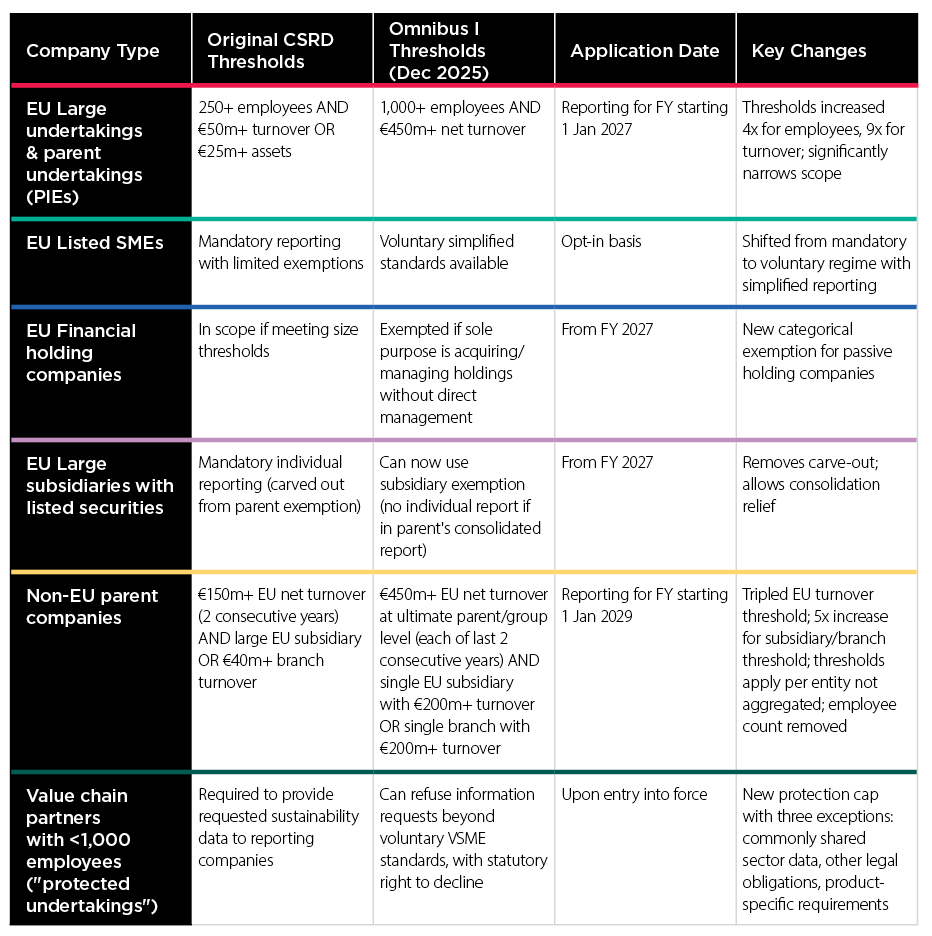
Who’s in Scope Now? 

The scope thresholds for the CSRD legislation have changed since the Omnibus I Directive was approved late in 2025. The graphic below shows who was, and is now, in scope*. 

*at time of writing, the Omnibus Directive has not yet been published in the EU Official Journal. This means they are not yet legally applicable and have not been transposed into national law by EU member states. This is expected to happen soon in 2026.

What Do In-scope Companies Now Have To Report? 

Companies must align with the ESRS standards. These require companies to: 

  • Conduct a double materiality assessment, which assesses how your business affects people and the planet, and how sustainability issues affect your business performance and value, so you canidentify your most important sustainability impacts, risks, and opportunities.
  • Disclose sustainability data on your material topics like targets and progress on emissions, gender pay, and workplace injuries. 
  • Explain how sustainability is governed and embedded in strategy, for example, setting out who is accountable for sustainability at the top of the organisation, how decisions are made, and how sustainability is integrated into your overall business strategy.
  • Demonstrate due diligence in your value chain. For example, are you assessing suppliers for risks and opportunities, and do you have a plan in place to manage these risks and opportunities? 
  • Have sustainability data and statements independently audited by third-parties. 

Benefits of Aligning with the ESRS reporting standards 

Even if you’re not under scope of the CSRD, aligning with the ESRS standards is a great way to make your business more resilient. By aligning to these leading reporting standards, you will: 

1. Better understand your impacts and build resilience

Conducting a double materiality assessment gives you a clear, structured view of how your business affects people and the planet, and how sustainability issues affect your performance and value. This helps you focus on what really matters, prioritise resources, manage risks more proactively, and seize new opportunities across your operations and markets.

2. Earn trust with investors, banks, and customers

By disclosing sustainability data in a consistent, decision-useful way, you demonstrate transparency and seriousness to your stakeholders. Third-party assurance over this data further strengthens confidence among investors, lenders, regulators, and key customers, showing that your claims are credible rather than cosmetic.

3. Embed sustainability into how you run the business

Clear sustainability governance makes it obvious who is accountable, how ESG is integrated into decision-making, and how sustainability links to business strategy. This prevents ESG from falling between departments and helps ensure that product development, capital allocation, and day-to-day decisions are aligned with your long-term sustainability goals.

4. Strengthen your supply chain relationships

Robust supplier due diligence reduces your exposure to environmental, social, and human rights risks in the value chain and helps you respond to stakeholder expectations on responsible sourcing. It also positions you as a reliable partner to customers and buyers who increasingly need trustworthy data and risk management from their suppliers.

5. Be able to leverage one framework to meet multiple expectations

ESRS has been designed to work alongside other recognised standards such as GRI and ISSB, and it increasingly overlaps with the expectations embedded in frameworks like B Corp. Aligning with ESRS therefore helps you meet a range of stakeholder demands efficiently, rather than managing multiple disconnected reporting requirements.

6. Get ready for what’s coming next

The regulatory direction of travel is clear: expectations on corporate sustainability and disclosure will continue to rise, not fall. By aligning with ESRS now, you build the systems, data, and governance you’ll need in place when future rules apply directly to you—reducing future scramble and positioning your business as ahead of the curve rather than playing catch-up.

Even if the CSRD no longer applies to your company, the case for alignment with the reporting standards within it (the ESRS) remains strong. This reporting framework offers more than compliance—it’s a roadmap for building transparency, trust, and long-term value. By understanding your impacts, strengthening governance, engaging your supply chain, and preparing for future regulations, you position your business as proactive, resilient, and credible in the eyes of investors, customers, and employees alike.

If you have questions about how regulatory changes may affect your company or how you can embed sustainability within your company, send us an email at [email protected]