
B Corp Certification and the Inner Development Goals
Leaders of current and aspiring B Corps are rightly anxious about the work ahead under the new B Corp Standards. Might the Inner Development Goals provide a roadmap for this next chapter?
Partner and CEO of Junxion, Mike has spent more than 20 years working to catalyse social responsibility and sustainability.
B Corp is rolling out its dramatically upgraded new standard, shifting from a flexible, points-based system to minimum performance requirements across seven impact topics, all verified through a more rigorous, third‑party assurance process.
Companies will need to embed new policies and processes, produce better data, and show credible evidence that they manage material social and environmental issues over time. Certification is less about a clever sprint through the B Impact Assessment and more about building a durable, stakeholder‑centred management system.
Leading Change
The new standards invite leaders to rethink their businesses’ capacity to be a ‘force for good,’ which implies a deeper understanding of purpose, transformation, and impact, and a different conception of success. This was always B Corps’ aspiration—but the new standards pull the certification toward the very leading edge of social purpose business. In practice, this means leaders are feeling the pressure of higher expectations: their business model, governance, and operations must now consistently meet a new, much higher threshold of performance.
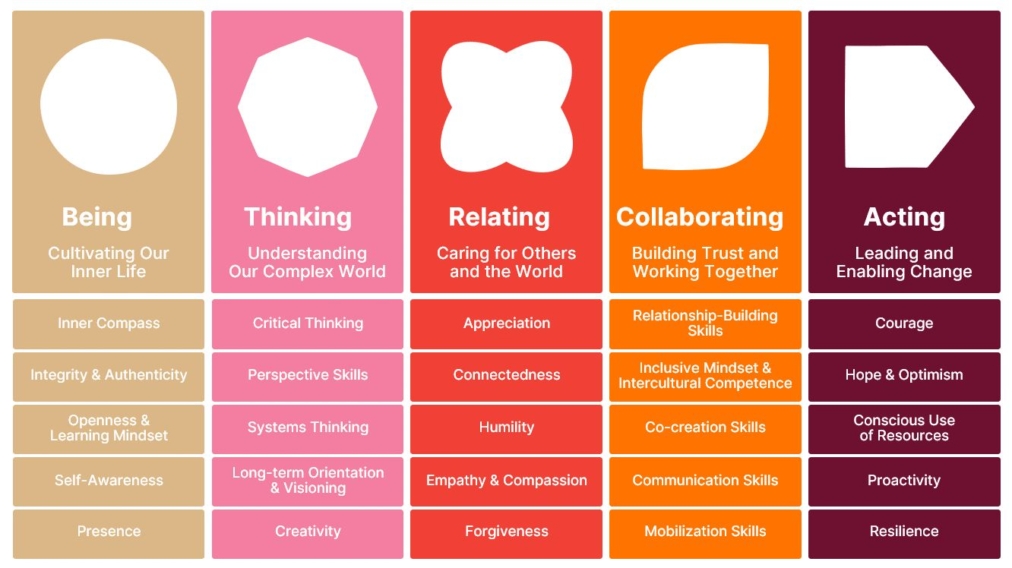
The Inner Development Goals are a suite of 25 learnable leadership skills, across five dimensions of inner growth: Being, Thinking, Relating, Collaborating, and Acting.
They include essential human skills like self‑awareness, humility, empathy, courage, and systems thinking. This ‘Guide’ to healthy, effective leadership was co‑created with researchers, practitioners, and leaders who asked a simple question: what inner capacities do we need if we’re going to make progress on complex societal goals? (They originally were specifically looking at the Sustainable Development Goals.)
The core insight is disarmingly simple: outer change relies on inner capabilities. Without self‑awareness, perspective‑taking, and the courage to act under uncertainty, even the best‑designed strategies or plans will stall.
The B Corp Standards tell us what good looks like. The Inner Development Goals speak to how high performance leaders can make that level of performance real and sustainable.
How Do the IDGs Align with B Corp?
Set the Inner Development Goals side by side with the B Corp Standards and their compatibility quickly becomes apparent:
- Consider the themes of governance and accountability in the new B Corp standards, which demand stakeholder identification, prioritisation, and meaningful engagement. Those requirements map directly to the Relating and Collaborating skills in the IDGs: empathy and compassion, communication, and co‑creation, etc.
- Strong policies and processes on climate, supply chains, and human rights require complex judgement and systems thinking. That’s the Thinking dimension of the IDGs—the ability to understand our complex world and the systems within it, to take a long-term orientation, and to maintain perspective and uplift creativity.
- And B Corps’ requirement for continuous improvement across impact topics calls for optimism, courage, and the conscious use of resources. That’s Acting: hope, proactivity, and the resilience that keeps us moving despite uncertain times.
When leaders frame B Corp simply as a compliance exercise, they often generate resistance, fatigue, or quiet cynicism. When they pair the standards with a shared language of inner development, they invite colleagues into a growth journey—personal and organisational.
Practical Ways to Use Both
How might you bring these two compatible models together to enhance and accelerate the performance of your team and the pursuit of your B Corp Certification?
Start with an honest inner/outer diagnostic
Map where you stand against the new B Lab impact topics and requirements, then invite your leadership team to reflect on which IDG dimensions feel relatively strong or underdeveloped in your culture. You might be surprised to see how the gaps match one another—and how embracing specific IDG skills might help you unlock what’s stuck in your B Corp work.
Build IDG practices into your B Corp project cadence
For example, begin key standards meetings with a short pause or check‑in (Being), use structured perspective‑taking when discussing stakeholders (Thinking and Relating), and deliberately rotate facilitation roles to strengthen shared leadership skills (Collaborating).
Treat difficult trade‑off conversations as IDG deep dives
When you’re balancing margin against living wages, or speed against supply‑chain integrity, explicitly name the inner skills you’re using—courage, humility, long‑term orientation—and reflect on how those capacities are evolving over time.
Invest in managers as inner‑capacity builders
Under V2.2, a lot of the work sits in middle management: implementing policies, gathering data, and engaging teams. Equip these leaders with IDG‑aligned learning—coaching skills, feedback, conflict transformation—so they can move beyond the apparent tension between performance pressure and human flourishing, finding the synthesis at the heart of the social purpose business.
In other words, let B Corp shape the architecture of your impact strategy, and let the Inner Development Goals shape the culture and capabilities that will keep that strategy alive.
Better Performance Drives Deeper Impact
Put together, the B Corp Certification and the Inner Development Goals can help companies move beyond ‘certification as a badge’ toward ‘certification as a practice.’
The new B Corp standards raise the floor on what responsible businesses must do; the IDGs raise the ceiling on who your people can become as they lead your business.
Combine these well, and you’ll feel a significant shift. Compliance reviews turn into learning conversations. ESG data collection becomes a way to notice patterns and redesign the business. Strategy retreats become spaces where leaders can admit what feels hard, reconnect to why the work matters, and recommit to the long haul. Rather than being in conflict, performance and impact reinforce one another.
At a time when standards are tightening, scrutiny is increasing, and expectations of businesses are higher, the way forward may indeed be inward.
Ready to embrace a new mode of leadership? Get in touch to learn more about the Inner Development Goals—and more importantly, to turn them to your advantage in strategy, planning, community engagement, and the B Corp Certification.
