
A Guide to B Corp Certification
The B Corp movement is growing year after year. We explore what it means to be a B Corp, why it’s beneficial for business, and how certification works.
Adam is co-owner of Junxion and has been working in sustainability as a campaigner, communicator and consultant for over 30 years.
Sustainability and social impact are no longer nice-to-haves; they are essential drivers of growth, resilience, and lasting business value.
There’s no shortage of accreditations out there to help companies become more sustainable, but none are as holistic and comprehensive as B Corp certification. Across 160+ industries in 100+ countries, there are more than 10,000 certified B Corp companies worldwide, and that number is growing all the time.
What Is a B Corp?
In a nutshell, a B Corp is a business that balances profit with purpose and is actively working to make the world a better place. Companies can call themselves a B Corp only once they’ve gone through a rigorous certification process. It’s not easy to get certified, and that’s what makes B Corps so important – they’re doing the hard work.
What Are The Benefits of B Corp Certification?
B Corp status brings a host of benefits. Chiefly, your business has a credible, universally recognized way of demonstrating its commitment to sustainability. This is critical at a time when investors, clients and consumers are demanding higher sustainability standards from the companies they engage with. As the public and regulators become increasingly savvy to greenwashing, B Corp status is proof that you’re making meaningful progress. In fact, B Corps attracted 18% more growth funding than other businesses in 2025 and 85% of consumers aware of B Corp say it influences what they buy.
B Corp is a highly practical framework: going through the assessment and verification process helps you benchmark performance, reveal ESG risks, and identify concrete ways to strengthen your sustainability strategy, governance and impact over time. For example, B Corps are four times as likely to identify biodiversity risks than non-B Corp peers.
Then there’s the important impact B Corp certification has within a business. Gaining B Corp status is a powerful way to attract talent and engage existing employees in the company’s mission and purpose. In fact, B Corps experienced an 11% employee headcount increase compared to just 2% of non-B Corps in 2025 and often see higher employee engagement.
And then there’s being part of the vibrant and empowered B Corp community, where companies collaborate with others to find solutions to specific challenges, and network with like-minded companies to explore opportunities for growth and development.
Who Can Certify As a B Corp?
A business can certify as a B Corp if it operates for profit in a competitive market and has been operational for at least a year. Certification is open to all companies (including sole traders) meeting these criteria from any sector, although charities and non-profit organizations are not eligible. You don’t need to be directly involved in products or services that could be classed as sustainable in their own right – it’s also about the way a business is run, how it manages its environmental impact, treats its workers, and engages with its communities.
How Much Does It Cost to Become a B Corp?
There are different fees when it comes to B Corp. If you’re a new B Corp, you will pay a submission fee, a verification fee, an annual certification fee and an audit fee. Each of these fees is based on a company’s total annual revenue; if you’re smaller, you pay less. Once you’ve certified, you only pay the annual certification fee.
The pricing structure is slightly different depending on where your company is located. For UK companies:
Submission fee: from £200 to £800
Verification fee: from £360 to £7,200
Certification fee: from £1,000 to £60,000
For Europe, see fee breakdown here, and for North America, see fee breakdown here.
For companies applying for Pending B Corp status (a temporary designation for early‑stage companies that want to commit to the B Corp path before they are eligible for full certification), a one-time fee of £500 (+ VAT) is payable, which covers the 12-month period.
Are There Any Discounts Available?
Yes. Entrepreneurs facing systemic barriers to business ownership (such as Women, People of Color and Underrepresented Ethnicities, LGBTQ+ and Persons with Disabilities) can receive a 40% discount on certification fees.
What Are The Stages of the B Corp Certification Process?
There are four key stages of the certification process.
1) Register on B Impact, B Lab’s free sustainability management tool. Here you’ll complete the certification setup questionnaire and the Risk Tool, which changes the requirements you’ll need to meet. If you’re a company with subsidiaries or a parent company, you’ll explain your decision-making structure and B Lab will determine how many certifications you need to complete.
2) Scan the gaps and plan improvements. It’s very rare for companies to have all the correct policies and practices to certify straight away. You can use the requirements view, improvement reports and knowledge base to see which Year 0 sub‑requirements you currently meet and don’t meet, set goals and start closing gaps, keeping the Year 0 / 3 / 5 continuous‑improvement cadence in mind (all businesses are required to demonstrate progress over time).
3) Complete the Self Assessment. For each sub-requirement, indicate your company’s current status (met / not met / in progress) and submit evidence. Your responses will populate a dashboard that identifies key gaps, tracks the number of requirements met, and highlights areas for focused improvement.
4) Submit, get audited and certify! Once you’ve met all key requirements with evidence, you can submit. B Lab assigns you an assurance provider to conduct the audit. The assurance provider audits your company’s Self-Assessment to determine the certification outcome. Some requirements may need further work after this audit. When your auditor is happy, your certification will be passed to B Lab and you’ll be certified shortly after. Then you need to recertify every three years.
How Long Does It Take to Become a B Corp?
B Corp certification is highly valued because it’s a rigorous and substantial process, so you can expect it to take time and effort. The time it takes to complete the Self Assessment will depend on the size of your business and how prepared you are to answer the questions; this can take anywhere from a day to several months.
If you don’t have adequate policies and practices in topics like Climate Action, you’ll need to create them. How long that will take depends on the complexity of the issues you need to address. After you’ve submitted and have correctly met all criteria and provided the right evidence, you should be processed, audited and certified between 2-3 months. If you have any issues during your third-party audit, then you have up to 6 months to fix big issues before you can certify (smaller issues can be navigated during your next audit).
In short, it’s not a quick process, and you should expect certification to take at least a year, if not longer. However, it’s the robust nature of this accreditation that sets B Corps apart from the rest.
Can a Company Take The B Impact Self Assessment Without Applying For Official Certification?
Yes, absolutely. Many companies use the free assessment as a way to measure their sustainability activities and get ideas on how they can improve their impact on society and the environment. Even if you don’t want to go through the certification process, this is a great way to measure and address your sustainability.
How Is B Corp Status Maintained?
B Corps need to recertify every three years to demonstrate their continued commitment to B Corp principles. This can be a labour-intensive process, so it’s important that companies build this into their long-term strategy and operations.
How Does B Corp Relate to Other Standards?
The B Corp standards are aligned with, and increasingly interoperable with, mainstream sustainability standards and frameworks like the Global Reporting Initiative (GRI), the Corporate Sustainability Reporting Directive (CSRD), the Science-Based Targets Initiative (SBTi) and others. This means data and methodologies from those frameworks can be used as evidence for B Corp requirements.
What Support is Available For Companies Looking To Certify?
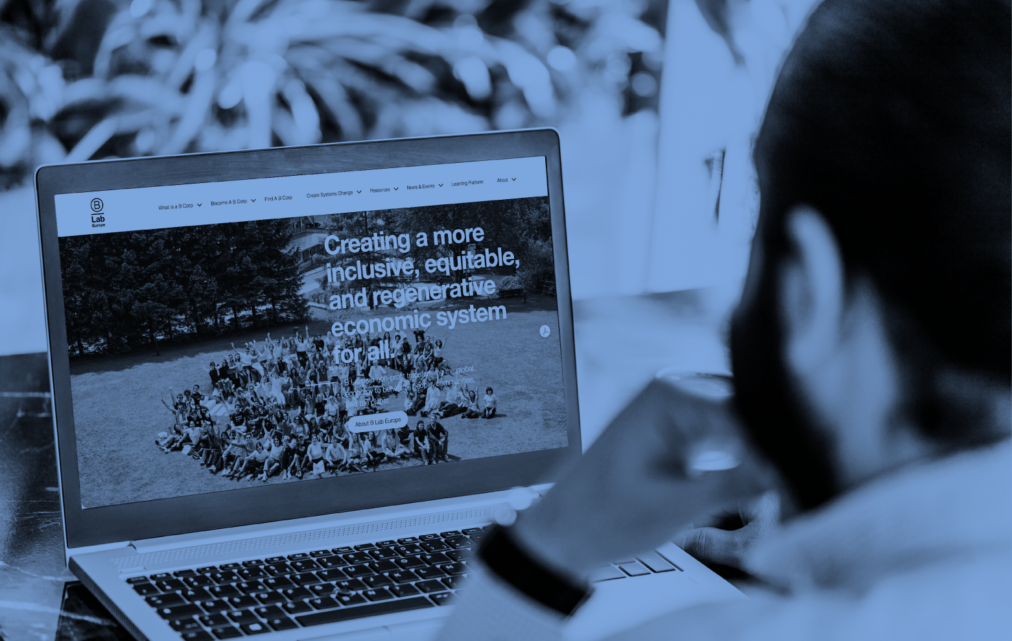
Going for B Corp certification might seem like a daunting process, but there’s plenty of help and advice out there to help you on your journey. The B Lab website is a great place to start, as is the BIA Knowledge Base. Or you can reach out to a consultancy like Junxion, where trained sustainability experts help you navigate the framework, ensuring you certify smoothly and efficiently and provide advice on how to embed B Corp into your business strategy, culture and communications.
