
Skip Navigation
March, 10, 2026  |  Mike Rowlands  |    | 

What Does it Mean to ‘Be the Change?’
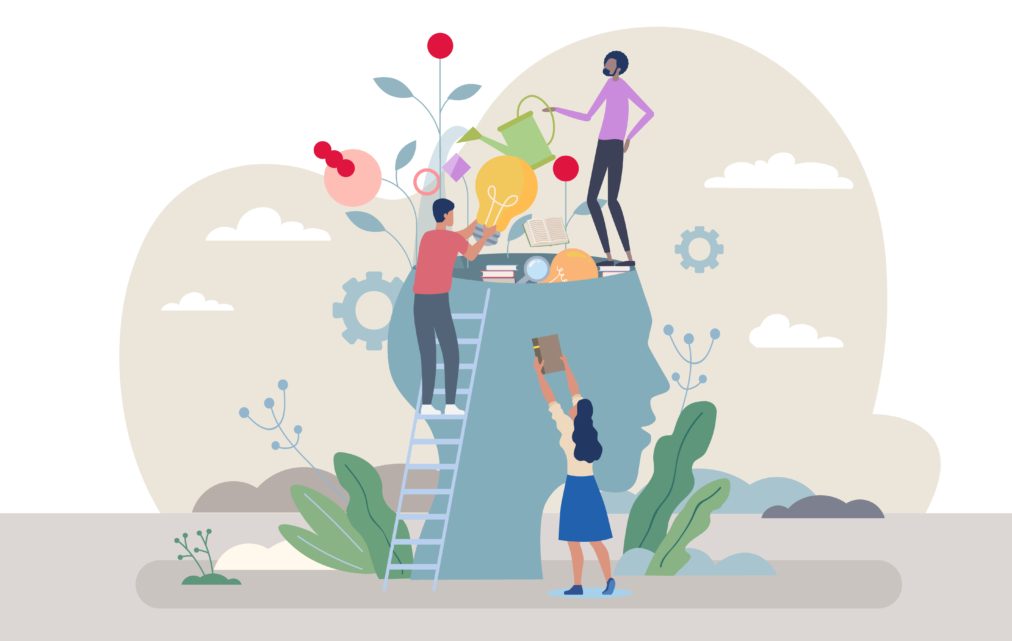
What human qualities do we need to develop if we’re serious about achieving big, world-changing impact? This powerful question led to a multi-year project to develop the Inner Development Goals.

Mike Rowlands
Partner and CEO of Junxion, Mike has spent more than 20 years working to catalyse social responsibility and sustainability.

I’ve spent most of my career working alongside leaders who are trying to change the world for the better. Some are animated by climate, others by inequity, others by the loneliness and fragility that seem baked into modern life. And nearly all of them hit the same wall.

Regardless of whether they work in business, government, or civil society, all of them are trying to build organizations that make a meaningful contribution to our collective wellbeing.

It’s not the tools, or the strategy, or even the money that slows them down. It’s capacity. In their organizations and in themselves. The work is complex. The stakes feel high. The pressure is relentless. And they struggle to muster the capacity to persist.

Inner Growth for Outer Change

The Inner Development Goals (IDGs) were created to answer a simple question: What human qualities do we need to develop if we’re serious about achieving the UN Sustainable Development Goals and other big, systemic shifts? Twenty-five distinct skills are organized in five dimensions: Being, Thinking, Relating, Collaborating, and Acting.

If you lead a social purpose organization, you already care about outer change—new products and services, better governance, more positive impact. The IDGs invite us to bring the same intention to inner change: Who we are as leaders? How we show up in our organizations? And how do we relate to the people and places our organizations touch?

In my experience, that inner work is rarely ‘extra.’ It’s the fundamental, foundational work that makes everything else possible.

Can you consistently muster the capacity to persist?

Being: Holding Steadily to Your Purpose

The first IDG dimension, Being, is about our relationship to ourselves—our inner compass, integrity, openness, self‑awareness, and presence.

For social purpose leaders, these are not soft skills. They’re navigational tools. An inner compass helps us to make the hard calls: Do we accept this misaligned contract? How far do we bend our values for growth? Do we stay the course when the numbers feel risky?

Most leadership teams I meet can recite their organizational purpose. Fewer have done the work to connect that shared purpose to their own personal ‘why.’ When we take time to explore that connection, some important things happen: strategy conversations become less abstract and more honest. Trade‑offs are easier to see. So are the costs of compromise.

Here’s one practical step you can take: Invite your leadership team—and your board of directors—to articulate their personal purpose and values, then explore together where those align with and stretch your organizational purpose. Use that connection as a touchstone when you’re under pressure.

Thinking: Making Sense of Complexity

The second dimension of the IDGs, Thinking, includes the cognitive skills we need for complex problem‑solving: critical thinking, systems thinking and the ability to see the system from others’ points of view, long‑term envisioning, and creativity.

Most organizations bridge or are stuck between overlapping systems—markets, communities, policy, culture, ecology. There’s no linear path from ‘good idea’ to ‘transformed system.’ So we need the skills to ‘zoom out’ to see patterns, and ‘zoom in’ to make the next, best move.

This is why we at Junxion think of strategy not as a fixed and static plan, but as an ongoing practice of learning. We’ve seen again and again that the most effective social purpose organizations treat planning as an ongoing cycle of inquiry: What are we learning from our work? What’s shifting around us that we are unable to control or even influence? What does that mean for our next step?

Effective organizations treat planning as an ongoing process of inquiry

Try framing your next strategy refresh around a handful of big questions rather than a long list of projects. Invite diverse voices—especially from communities most affected by your work—into the sense‑making. You’ll likely surface different insights, and a more resilient strategy.

Relationships as Essential Infrastructure

The Relating dimension includes skills like empathy, humility, appreciation, and connectedness. And the Collaborating dimension adds sills for relationship development, inclusion and intercultural competence and skills of communication and mobilisation.

In social purpose work, relationships are not ‘nice to have.’ They are vital infrastructure. Partnerships, coalitions, and community trust are often the real assets on your organizational balance sheet, even if they don’t show up in your financials. And this is not merely passive ‘social capital,’ but the work to activate it.

Yet many organizations still treat relational work as invisible labour, or as something that happens ‘when there’s time’ (and let’s face it: there never is.) The IDGs ask us to name these abilities, value them, and invest in them.

That might include…

  • Building structured listening into your engagements and impact work.
  • Co‑designing programs or services with stakeholders—rather than just testing them after the fact.
  • Training your team in facilitation, feedback, and conflict skills, and recognising those who practise them, so that everyone can learn from each individual’s experience.

If your organization exists to help create a more just, regenerative world, then your internal culture is part of your impact. People should be able to feel your purpose in how you talk with them, not just read it on your website.

Acting: Courage Without Burnout

The final dimension, Acting, focuses on qualities like courage, optimism, the conscious use of resources and resilience. These are familiar to every social entrepreneur I know. None steps into this work without some mix of (ferocious?) stubbornness and (unreasonable?) hope!

But here’s the trap: courage without care is the autobahn to burnout. I’ve watched too many leaders exhaust themselves in service of their cause, then struggle to see a way back.

The IDGs invite a different stance—action focused by inner clarity, supported by strong relationships, and informed by thoughtful sense‑making. That kind of action is still bold, but it’s also sustainable.

Courage without care is the autobahn to burnout

You might start small. Choose one upcoming initiative—launching a new service, shifting a policy, entering a partnership. Before you move, ask three questions:

  • How do we need to be, to do this well?
  • What do we need to understand more deeply, before we act?
  • How will we care for ourselves and each other as we go?

Notice that all three point back to inner development.

Bringing the IDGs into Your Work

The IDG framework is rightly understood as a guide designed to be adapted in different contexts.  You don’t need to adopt another reporting system, change the rhythms of planning and working that are already driving sustainable success, or upend the way your organization is structured. You can quietly begin to weave this language into what you already do, so that over time you weave these skills into how you work..

You might…

  • Map your current values and leadership expectations to the five IDG dimensions. Where are you strong? Where are you under‑invested? How might you accelerate learning and development?
  • Add one or two IDG qualities into performance conversations—not as a new checklist, but as a shared vocabulary for growth.
  • Reach out for support. As a trained IDG Ambassador, I’m here to help, whether that’s a simple conversation, an integrated approach to strategy and planning, or a deep dive into the design of your people and culture systems.

In a time when so much feels fragile, it’s tempting to double down on control, to rush to what appears to be next, and to chase short‑term wins. The Inner Development Goals offer a different path where who we are as leaders is as important as what we build, and where inner growth and outer impact reinforce each other, day by day.

Ready to embrace a new mode of leadership? Get in touch to learn more about the Inner Development Goals—and more importantly, to turn them to your advantage in strategy, planning, impact assessment, and community engagement.