
Skip Navigation
September, 18, 2026  |  Mike Rowlands  |    |    | 

Climate & Circularity: Imperatives for Resilience in an Uncertain World
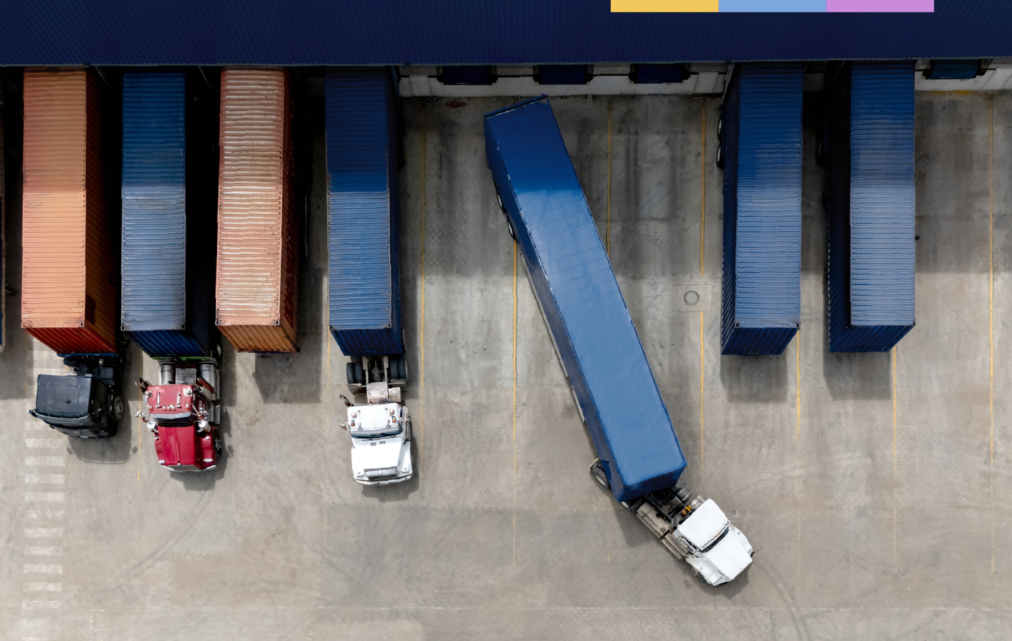

Climate action and circularity are central to building an enterprise that is less vulnerable to disruption and more adaptive to changing conditions—future-proofed for a changing world.

Mike Rowlands
Partner and CEO of Junxion, Mike has spent more than 20 years working to catalyse social responsibility and sustainability.

Organizational resilience is often framed as the ability to recover after disruption. But the more useful ambition is to build an enterprise that is less exposed to disruption in the first place—and better able to adapt when conditions change.

Climate action and circularity are central to that work. While they’ve been trapped in sustainability narratives, they’re better understood as practical capabilities that strengthen organizations’ capacity to withstand shocks, respond to uncertainty, and create durable value.

In Junxion’s Blueprint for Resilience, Climate & Circularity is one of ten mutually reinforcing dimensions of a resilient enterprise. It asks leaders to consider the full scope of their organization’s environmental impacts, dependencies, and opportunities—not only within their own operations, but across their value chain and sphere of influence.

Resilience Starts with Exposure

In case you hadn’t noticed, climate change is already a business issue. Extreme weather, disrupted supply, volatile energy costs, changing regulation, insurance constraints, and shifting customer expectations can all interrupt an organization’s plans. These impacts rarely arrive in isolation. A supply shortage can affect costs, customer service, employee workload, and reputation at the same time. For one of our clients, a textile manufacturer, broadening the definition of risk meant looking beyond factory energy use to the landscapes, livestock, suppliers and customer preferences on which the business depends. Climate disruption could affect fibre availability and cost, but it could also change the products customers want to buy. That creates both exposure and an incentive to innovate.

Organizations that understand their climate exposure can make wiser strategic choices before a crisis forces their hand. Look beyond direct operational emissions or facility-level risks.

Understand your climate exposure so you can make wiser strategic choices.

Where do critical materials originate? Which suppliers, infrastructure systems, communities, or ecosystems does your enterprise rely on? What happens if a key resource becomes scarce, expensive, unreliable, or socially unacceptable?

Our aim is not to help you make perfect predictions. That’s simply not possible amid the complexities of our changing world—and the changing business context in which we all operate. No, our aim is to help you to prepare: identifying material vulnerabilities early enough to diversify, redesign, invest, or change course.

Climate-informed planning shifts an organization away from reacting to individual disruptions toward building capacity for an increasingly dynamic environment.

Circularity Reduces Dependency

A linear operating model follows a familiar pattern: take resources, make products or services, use them, and dispose of what remains. Circularity challenges that model. It seeks to reduce waste and material use from the outset, keep products and materials in use for longer, and recover value at the end of a product’s useful life.

For organizational resilience, this is fundamentally a question of dependency. 

The more an organization depends on virgin inputs, single-use materials, distant suppliers, or fragile disposal systems, the more exposed it may be to price swings, shortages, regulatory change, and public scrutiny.

Design for durability, repair, reuse, and remanufacturing.

Circular practices can reduce those exposures. Designing for durability, repair, reuse, remanufacture, sharing, or recovery may lower material demand and create alternative sources of value. Rethinking packaging can reduce costs and waste. Building take-back or refurbishment models can deepen customer relationships while improving visibility into where products and materials go after sale.

Circularity will of course look different across sectors. For a manufacturer, it may mean product redesign and reverse logistics. For a professional-services firm, it may involve lower-impact procurement, digital-first delivery, resource-efficient workplaces, and using influence to help clients adopt more regenerative models. However, the principle is consistent: use fewer finite resources, preserve their value for longer, and design out avoidable waste.

Better Questions Create Better Options

Climate & Circularity does not belong exclusively to sustainability teams. It is a strategic lens for leadership, finance, operations, product development, procurement, people, and marketing.

Unlock strategic value by untethering circularity from your sustainability team

Leaders can start with some key questions:

  • Which climate-related hazards and resource constraints could most affect our strategy, operations, people, and customers?
  • Where are we overly reliant on a small number of materials, suppliers, geographies, or systems?
  • What waste—material, energy, time, or capability—does our current model produce?
  • How might we redesign our offerings and partnerships to retain more value?
  • Which climate and circularity investments would improve adaptability even if regulations, prices, or customer preferences change?

These questions often reveal opportunities that you might miss in a more conventional risk review. A circular initiative may start as a waste-reduction project and become a new revenue model. A climate-risk assessment may reveal the need for stronger supplier relationships, more distributed operations, or more robust business-continuity planning. The result is not simply lower environmental impact; it is a wider set of strategic options.

Trust, Talent, and Legitimacy

Resilience also depends on relationships. Customers, employees, investors, communities, and partners increasingly expect organizations to understand and manage their environmental impacts. Credible action can strengthen trust; inaction, superficial commitments, or unsupported claims can damage it quickly.

A meaningful climate and circularity agenda signals that an organization is paying attention to the conditions in which it operates—and taking responsibility for the consequences of its choices. That matters for reputation, particularly when stakeholders are deciding whom to buy from, work for, fund, partner with, or regulate.

Importantly, it also matters in-house: Employees are more likely to engage when they can see how their work contributes to a viable future. Inviting teams to identify waste, redesign processes, and develop lower-impact solutions turns sustainability from a corporate statement into a shared practice of learning and improvement.

Build Resilience By Design

Think of the satisfying click of a Brompton bicycle folding neatly for the train, or the comfort of reaching again for your well-loved Seasalt sweater. These everyday moments reveal something bigger: value is created not simply when a product is sold, but when it is designed to remain useful, wanted and in use.

It is especially meaningful that in our work with Brompton and Seasalt—and with BGF, one of their investors—we experience the whole picture of the transition to a more circular economy as a systems challenge. Businesses can design for durability and lower-impact materials; investors can help create the conditions for these choices to endure, by bringing climate & circularity considerations into investment decisions, post-investment plans, and long-term value creation.

Climate & Circularity should be treated as more than a compliance exercise and certainly more than a separate program that sits alongside strategy. Instead, think about strategy through the twin lenses of climate and circularity to make strategy more durable. By reducing dependence on vulnerable systems, anticipating climate-related change, using resources more intelligently, and earning stakeholder trust, organizations become better equipped to absorb shocks without losing sight of their purpose.

The most resilient organizations today—and the leading organizations of tomorrow—will not simply survive the transition to a lower-carbon, more circular economy. They will help shape it. And they’ll benefit from stronger operations, more engaged people, and greater value for the stakeholders who depend on them.

Unsure where to start? We can help clear up the confusion and co-develop a future-proof strategy that will motivate employees, draw in customers and attract investors. Get in touch to learn more!